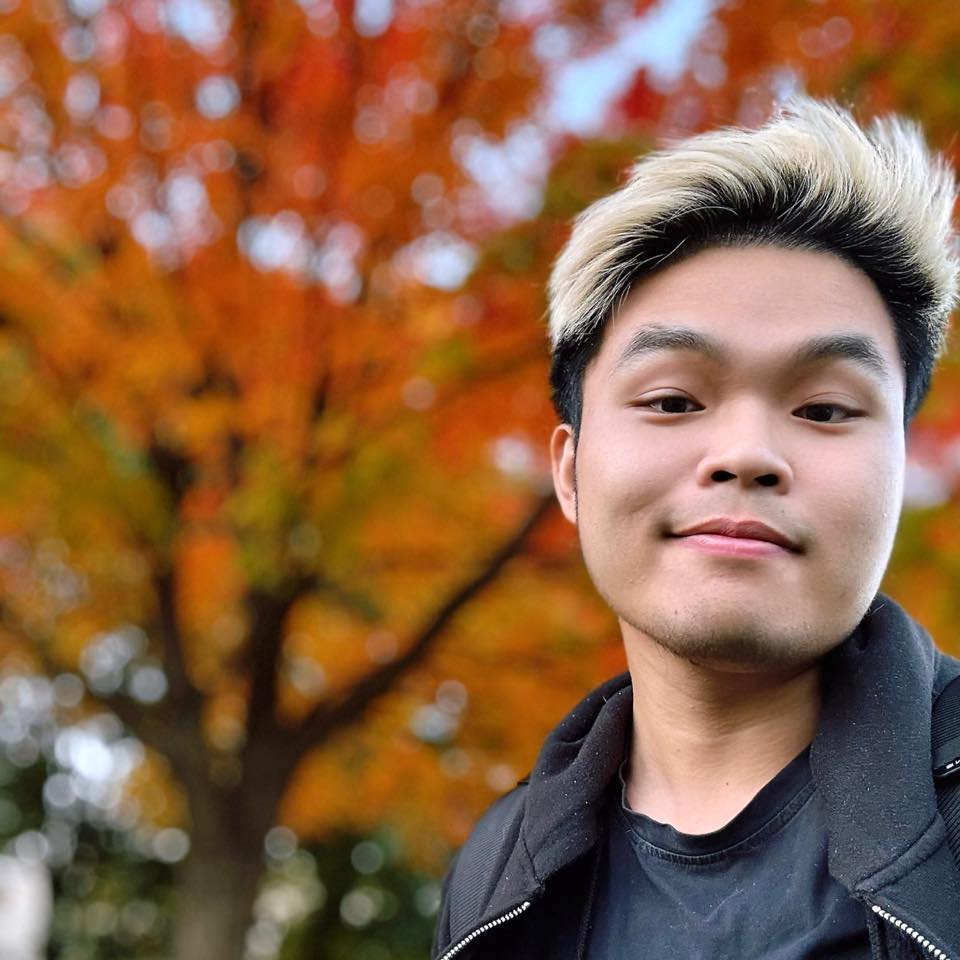
Thien Quy Pham
I am a PhD candidate in Biostatistics and Health Data Science at the University of Pittsburgh, where I work in the Bioinformatics and Statistical Machine Learning Group led by Dr. George Tseng. I develop statistical methods for circadian biology and multi-omics data, with additional work in causal and longitudinal inference for biomedical studies.
My work sits between method development and collaborative science. I am especially interested in models for structured, high-dimensional biological data that remain interpretable across studies, tissues, and data modalities.
I began my training as a medical student in Vietnam, where the questions I cared about most kept turning out to be quantitative ones — why diseases unfold the way they do, why some patients respond to treatment and others don't, why the same intervention seems to work in one population and fail in another. The clinical setting taught me which questions matter; it didn't give me the tools to answer them. I followed those tools to UNC–Chapel Hill for statistics and mathematics, and then to Pittsburgh for biostatistics. The methodological work I do now remains motivated by the patients and biological questions that first drew me in. That early training still helps me act as a bridge between clinical questions and statistical methodology — both in the methods I develop and in the collaborations I take on.
I expect to graduate in November 2026 and am fortunate to be joining the Department of Statistics and Data Science at Carnegie Mellon University in December 2026 as Special Faculty (Postdoctoral Researcher) under the guidance of Dr. Kathryn Roeder.
Research themes
My current research has three connected threads: Bayesian models for circadian rhythms, integrative methods for multi-omics data, and longitudinal or causal methods for applied biomedical research. Across these areas, I aim to build methods that are statistically principled, scientifically interpretable, and useful in real collaborative settings.
Bayesian methods for circadian biology
I develop hierarchical Bayesian and meta-analytic models for detecting, aligning, and comparing circadian programs across tissues, studies, and species.
Multi-omics integration
I work on probabilistic and deep-learning approaches, including sparse multi-CCA, VAEs, and graph neural networks, to integrate RNA-seq, single-cell, DNA methylation, and proteomics data.
Causal & longitudinal inference
In collaborative work, I apply mixed-effects models, causal mediation, and related methods to longitudinal and correlated data from clinical trials and cohort studies spanning HIV, women's health, and rehabilitation research.
Selected publications
An asterisk (*) denotes first or co-first author.
circadian 2026
BayesRC: a comparative Bayesian multilevel framework for circadian synchrony
A methodological project on comparing circadian synchrony across conditions through a multilevel Bayesian meta-analytic framework.
in stress 2026
Impact of Sex Chromosomes and Gonad Type in Stress Susceptibility in Corticostriatal Brain Regions
Multi-omics analysis of how sex chromosomes and gonadal hormones shape stress-related transcriptional programs in corticostriatal brain regions.
quality of life 2026
Tailored interventions for men living with HIV
First-author analysis of a multilevel intervention and its association with quality-of-life outcomes among men living with HIV in India.
See the full publication list →
Methods and applications
What I work with
Across projects, I work with bulk and single-cell RNA-seq, DNA methylation, proteomics, longitudinal clinical data, and electronic health records. I am most useful when the analysis requires both statistical rigor and close attention to the scientific question.
I have also worked on pharmaceutical trials in nephrology and oncology, including projects at Otsuka and Merck. Those experiences strengthened my interest in study design, survival analysis, longitudinal endpoints, and the practical side of collaborative statistical work.
I am always glad to talk with collaborators in biomedicine, public health, and related areas, especially when the analytic strategy is still being developed.
Get in touchRecent news
- May 2026Presenting Comparative Bayesian multi-level framework for evaluating differential circadian synchrony across conditions at STATGEN 2026.
- May 2026Co-authored Impact of Sex Chromosomes and Gonad Type in Stress Susceptibility in Corticostriatal Brain Regions, published in PNAS.
- Apr 2026Accepted a Special Faculty (Postdoctoral Researcher) position in the Department of Statistics and Data Science at Carnegie Mellon University, beginning December 2026, under the guidance of Dr. Kathryn Roeder.
- Mar 2026Published first-author Enhancing quality of life through tailored interventions for men living with HIV in Quality of Life Research.
- Dec 2025Accepted a Biostatistics Internship at Merck in Biostatistics and Research Decision Sciences (BARDS), Oncology.
- Aug 2025Completed Senior Statistician Internship at Otsuka America Pharmaceutical (Bayesian meta-analysis for a Phase 3 IgA nephropathy trial).
- May 2025Received the Outstanding Teaching Assistant Award from the Department of Biostatistics.
- May 2025Received the Dean's Day Award from the School of Public Health.
- May 2025Received the STATGEN 2025 Travel Award to attend the conference.
- Apr 2025Passed the Ph.D. proposal exam and advanced to candidacy.
- Aug 2024Passed the Ph.D. Qualifying Exam (Theory & Applied).
Reach me at qtp1@pitt.edu. Outside research, I sing and spend a lot of time with my cat.